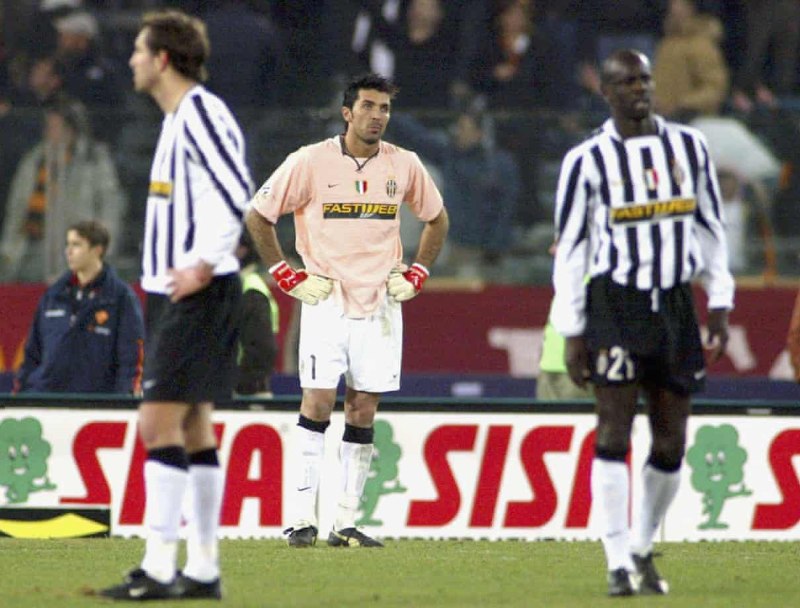
Gianluigi Buffon has opened up about a severe panic attack he experienced just before a Juventus match against Reggina in February 2004, a moment that threatened to derail his career. The incident occurred during warm-ups at a half-empty Stadio Delle Alpi, as Juventus sat six points off the Serie A lead with 13 games remaining. Despite still competing in the Champions League and the Coppa Italia, Buffon felt internally that the season was already lost.
The Onset of Panic
Buffon described the evening as cold and wet, typical of a Turin winter, with a sense of negativity hanging over the club after conceding four goals to Roma in their previous league game, followed by a tense Coppa Italia penalty win over Inter at San Siro. As he prepared for the match, he began to feel physically unwell. “After two minutes I put on my gloves, I stood in the goal and I realised that I was struggling to breathe,” he recalled. He felt dizzy, with a tightness in his diaphragm “as if I had been hit”.
Goalkeeping coach Ivano Bordon noticed something was wrong. Buffon, afraid of alarming him, tried to hide his distress but eventually approached Bordon and asked for substitute keeper Antonio Chimenti to warm up. “I couldn’t deal with that situation, or focus on my routines, because I didn’t know what was happening to me,” Buffon said. His speech was slurred and disjointed, but Bordon remained calm.
“You Aren’t Obliged To”
Bordon did not label it a panic attack, but his response was decisive. “Don’t worry, Gigi, you don’t have to play,” he told Buffon. He instructed him to walk alone for a few minutes while Chimenti prepared. “In 10 minutes you can tell me if you want to play or not, you aren’t obliged to.” That phrase, “you aren’t obliged to”, lifted a crushing weight. “It released enough air that I could breathe more easily,” Buffon said.
The freedom to choose gave him a sense of control. He walked through the stadium noise, trying to steady his mind. “You don’t have to play, you can go home whenever you want,” he told himself. But he also knew that leaving would mean never returning. “If I didn’t play that game against Reggina I would never play again and would become a kind of ghost,” he admitted.
A Mental Breakthrough
Buffon resolved to endure the match as a finite challenge: “The game lasts 90 minutes, you stay on the pitch for 90 minutes; then, when you are at home, you will continue to feel bad, you will die, and fuck everything.” He reassured himself that he could quit football after the final whistle. As Chimenti warmed up, Buffon found the strength to continue. At just 26, he misinterpreted his anxiety as a lack of courage — a feeling many young athletes might recognise, but few have confronted so publicly.